
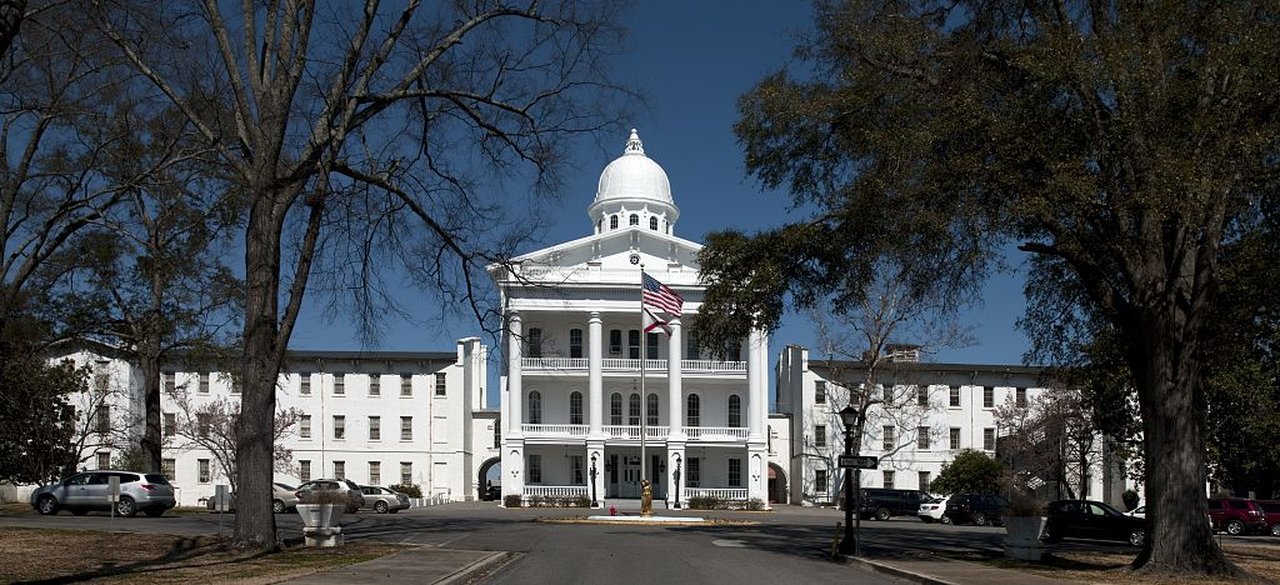
In 1970, people confined at Alabama's Bryce Hospital sued the state over conditions that gave them little chance to get better. The case grew to cover Partlow State School and Hospital, Alabama's institution for people labeled mentally retarded. On April 13, 1972, U.S. District Judge Frank M. Johnson Jr. issued twin opinions that set the first detailed, court-ordered minimum standards for treatment and habilitation in state institutions. The lawsuit ended on Dec. 5, 2003. Partlow closed on Dec. 28, 2011.
This part of the series follows Wyatt v. Stickney from Bryce to Partlow, through the 1972 standards and the decades of oversight that followed. It draws on Judge Johnson's published opinions, the Civil Rights Litigation Clearinghouse docket summary and Alabama news coverage of the Partlow closing.
Today the term is intellectual disability. This story uses older wording only in names, case titles and quotes from the record.
From Bryce to Partlow
Patients involuntarily confined at Bryce Hospital in Tuscaloosa filed the class action on Oct. 23, 1970, under 42 U.S.C. § 1983, according to the Civil Rights Litigation Clearinghouse. On March 12, 1971, Judge Johnson held that people civilly committed for mental treatment have a constitutional right to treatment that gives them a realistic chance to improve, and he gave Alabama six months to raise care at Bryce. That ruling is reported at 325 F. Supp. 781.
On Aug. 12, 1971, he enlarged the class to include people confined at Searcy Hospital and at Partlow State School and Hospital. Partlow, also in Tuscaloosa, had opened in 1923 as Alabama's public institution meant to habilitate people with intellectual disabilities. After the state filed its report, Judge Johnson found on Dec. 10, 1971, that the program still failed on three fundamentals: a humane psychological and physical environment, enough qualified staff, and individualized plans.
The April 1972 orders
On April 13, 1972, Judge Johnson filed two opinions. In Wyatt v. Stickney, 344 F. Supp. 373, he set minimum constitutional standards for treatment of people with mental illness at Bryce and Searcy. In Wyatt v. Stickney, 344 F. Supp. 387 — the Partlow decree — he concluded that residents had been denied a right to habilitation and ordered minimum standards into effect at once.
The Partlow opinion quotes his own March 2, 1972, interim emergency order. The evidence, he wrote, had portrayed Partlow as "a warehousing institution which, because of its atmosphere of psychological and physical deprivation, is wholly incapable of furnishing [habilitation] to the mentally retarded and is conducive only to the deterioration and the debilitation of the residents." Wards were grossly understaffed. Overcrowding led to serious accidents, some fatal. Safety and sanitation endangered health and life. The state offered no rebuttal.
Because civil commitment of a person with an intellectual disability could be justified only by habilitation, he held that once committed, "such a person is possessed of an inviolable constitutional right to habilitation." The standards in Appendix A to the Partlow decree were medical and constitutional minimums, not an ideal. He appointed a human rights committee, ordered a permanent professionally qualified administrator within 60 days and required a detailed compliance report within six months. He reserved ruling on a master and on forcing the sale of Mental Health Board land, giving state officials one more chance to fund and run a constitutional program.
The U.S. Court of Appeals for the Fifth Circuit affirmed the April 13, 1972, decisions in relevant part on Nov. 8, 1974, in Wyatt v. Aderholt, 503 F.2d 1305, the Clearinghouse summary says.
What the Partlow standards required
The Appendix A standards still read like a checklist for rights-based care. Among them:
- Habilitation as the point of confinement. Each resident had a right to a habilitation program suited to their needs, including medical care, education and training, without regard to age or degree of disability. The institution had to pursue normalization so people could live as normally as possible.
- Least restrictive setting. No one was to be admitted unless residence at Partlow was the least restrictive feasible setting, and no one was to be admitted if community programs could provide adequate habilitation. Residents had a right to the least restrictive conditions needed for habilitation, including moves from larger to smaller living units and from segregated to community-integrated living.
- Individualized plans. Within 14 days of admission, each resident needed an individualized habilitation plan written by qualified professionals. The plan had to state goals and a timetable, name responsible staff, identify the least restrictive setting needed and set criteria and a projected date for discharge. A post-institutionalization plan was required as well. Plans had to be reviewed at six months and at least annually by an interdisciplinary team.
- Restraint and unpaid labor limits. Physical restraint could be used only when absolutely necessary to protect the person or others, never as punishment, for staff convenience or as a substitute for a program, and only with written orders that expired within 12 hours, with checks at least every 30 minutes. Residents could not be required to perform institutional maintenance labor; voluntary work of that kind had to be paid under the Fair Labor Standards Act minimum wage.
- Medication and dignity. Medication could not be used as punishment, for convenience, as a substitute for habilitation or in amounts that interfered with the person's program. Residents kept rights to visitation and telephone contact unless a written professional order, renewed at least every six months, explained a restriction.
Those individualized plans are ancestors of today's individual support plan and person-centered planning. The least-restrictive and community-integration rules foreshadow later federal community care policy, including HCBS and the Olmstead integration mandate covered elsewhere on this site.
Decades of oversight, then an end
Court oversight did not end in 1972. The Clearinghouse summary tracks a long second act: a federal monitoring office in 1977, receivership of the department in 1980, a 1986 consent decree that required Joint Commission accreditation and Title XIX certification and progress on outplacement, further decrees in the early 1990s, and renewed enforcement fights in the mid-1990s over abuse, restraint of children and other failures. On Dec. 5, 2003, after a three-year settlement agreement, U.S. District Judge Myron H. Thompson terminated the lawsuit. The Tuscaloosa News reported the same day that both sides had asked him to dismiss the case and end 33 years of federal oversight.
Partlow itself outlasted the decree. On Dec. 28, 2011, the Alabama Department of Mental Health announced that the W.D. Partlow Developmental Center in Tuscaloosa had officially closed. WBRC reported that about 150 residents had been relocated since March of that year and that the last resident moved that day. AL.com, publishing the same evening, likewise said the last resident left Wednesday and that Partlow had been Alabama's last state-run residential center for people with intellectual disabilities. Advocates at People First of Alabama called the closing a statement that people with disabilities belong in society, not segregated in institutions.
The path from Partlow to community homes sits beside the stories of Pennhurst and Willowbrook in this series: court findings, detailed standards and, eventually, empty buildings.
Why this matters for providers and DSPs
- Individual plans came from court orders. The Partlow decree required a written habilitation plan with goals, responsible staff and a discharge horizon within days of admission. When you help update an ISP, you are working in a tradition that began as a constitutional minimum, not a paperwork preference.
- Least restrictive is not a slogan. Judge Johnson barred admission when community programs could habilitate the person and ordered movement toward smaller, more integrated settings. That logic still shapes placement decisions at a provider agency and in group home planning.
- Restraint and labor rules protect people you support. The 1972 limits — no restraint for convenience, timed orders, frequent checks, no unpaid institutional maintenance work — are early versions of rights rules every DSP is trained to follow.
- Standards without funding fail. Johnson warned that a lack of operating money was no excuse and that Alabama's legislature had underfunded Partlow since 1923. Today's rate and staffing fights are the same pressure in a new form.
Part 10 of this series turns to PARC v. Pennsylvania and Mills v. Board of Education, the early-1970s cases that opened public school doors for children with disabilities.