
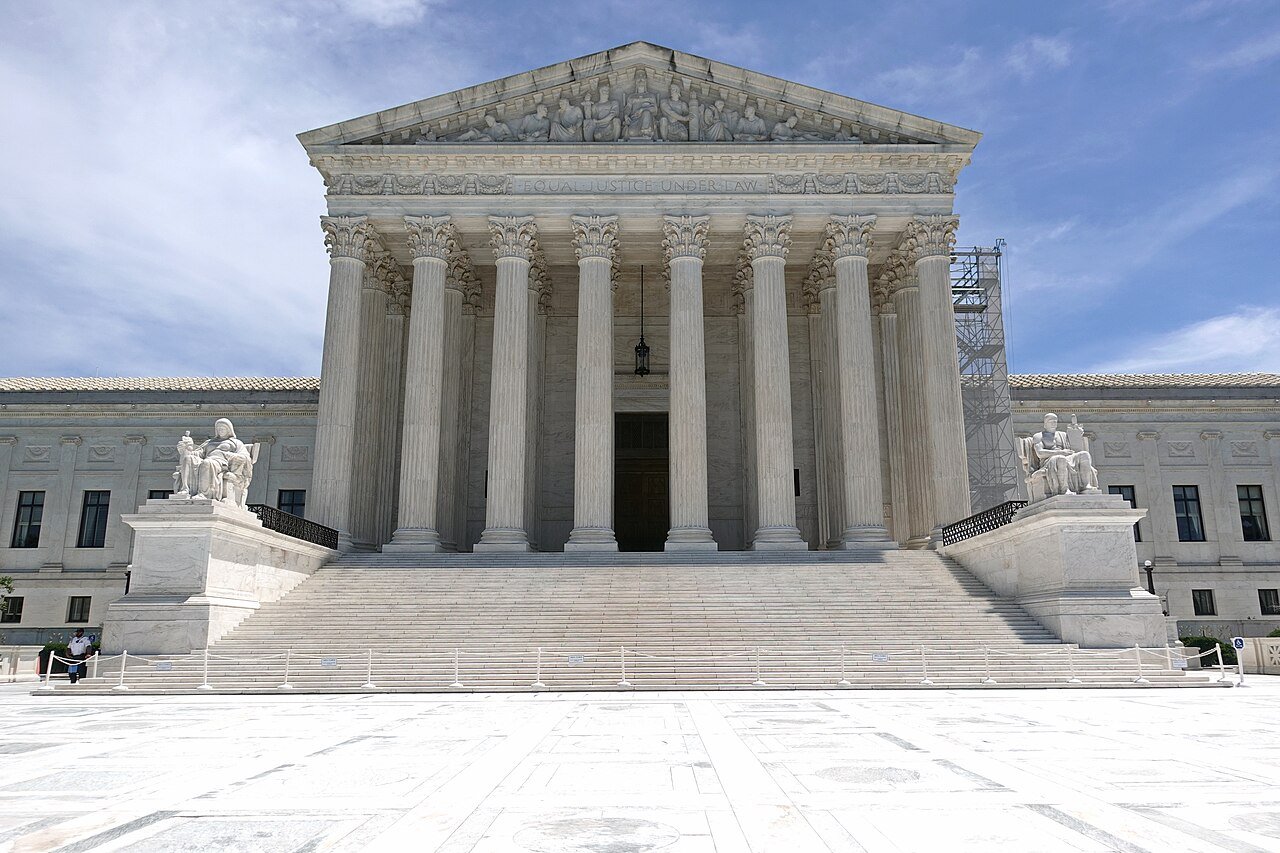
In its 1999 decision Olmstead v. L.C., the U.S. Supreme Court held that keeping people with disabilities in institutions when they could live in the community, and don't object, can be illegal discrimination under the Americans with Disabilities Act (ADA). The 6-3 ruling, written by Justice Ruth Bader Ginsburg, is the legal backbone of today's push toward community services for people with I/DD.
As of September 2026, the ruling itself still stands. But how the federal government enforces it changed sharply this year. This brief explains what the decision requires, how it has been enforced through settlements like those in Georgia and Virginia, and what shifted in 2026.
The case
Two Georgia women, known in court papers as L.C. and E.W., had intellectual disabilities and mental illness. Both were admitted to Georgia Regional Hospital at Atlanta for psychiatric treatment. Their treatment teams later concluded they could be cared for in community programs, but they stayed in the hospital. They sued the state under Title II of the ADA, which covers state and local governments.
A Justice Department regulation under Title II, still in force as of September 2026, says: "A public entity shall administer services, programs, and activities in the most integrated setting appropriate to the needs of qualified individuals with disabilities." This is often called the integration mandate.
What the Supreme Court decided
The Court's central holding was short: "Unjustified isolation, we hold, is properly regarded as discrimination based on disability."
Under the ruling, a state must provide community-based services when three things are true:
- The state's treatment professionals find that a community setting is appropriate for the person.
- The person does not oppose moving.
- The placement can be reasonably accommodated, taking into account the state's resources and the needs of others with disabilities.
The third point matters. The Court said states do not have to make changes that would fundamentally alter their programs. A state could show it is meeting its duty if it has a comprehensive, working plan to move people to less restrictive settings and a waiting list that moves at a reasonable pace. The Court also said the ADA does not force community placement on people who don't want it.
How Olmstead has been enforced
Individuals and advocates can sue states under the ADA. The U.S. Justice Department has also brought statewide cases, and some ended in court-enforced settlements that set targets for community services. Georgia and Virginia are two examples.
| Georgia | Virginia | |
|---|---|---|
| Settlement | October 2010, with the Justice Department | January 2012; court entered it in August 2012 |
| Who it covered | People with developmental disabilities and people with serious mental illness in state hospitals | People with I/DD in state training centers and in the community |
| Main I/DD terms | Stop admitting people with developmental disabilities to state hospitals by July 1, 2011; move them to community settings by July 1, 2015; 1,150 Medicaid waiver slots for home and community-based services; family supports for 2,350 families; 6 mobile crisis teams; 12 crisis respite homes | Community services, crisis supports, integrated day and employment services, quality and risk management, and provider rates |
| Status as of Sept. 2026 | Mental health provisions ended Feb. 11, 2026; I/DD provisions remain | Replaced by a permanent injunction on Jan. 15, 2025; state progress reports due until Jan. 15, 2032 |
Georgia
Georgia's case involved the same kind of state hospitals at issue in Olmstead. For people with developmental disabilities, it promised a stop to new state hospital admissions, moves to community settings, 1,150 waiver slots, family supports and crisis services, according to the Justice Department's fact sheet. People getting waivers under the agreement were to receive support coordination to help them reach medical, housing, transportation and other services.
On Feb. 11, 2026, a federal judge ended about 60 behavioral health provisions and the federal monitoring tied to them, the state's Department of Behavioral Health and Developmental Disabilities (DBHDD) announced. The provisions covering community services for people with I/DD remain in effect, and DBHDD said it is working toward release from them.
Virginia
Virginia's 2012 agreement focused on people with I/DD, including those living in state training centers. In January 2025, the court approved a permanent injunction covering the terms the state had not yet met.
The court's Independent Reviewer filed a 28th report in June 2026 and called it the next-to-last one. It found that Virginia met four more terms for the first time, including behavioral support services and timely waiver enrollment, while ten terms were not achieved. One gap was pay: the Governor's proposed budget for fiscal year 2027 funded only 29.3% of the provider rate increases recommended by the state's own rate study, enough to fully fund 7 of 11 DD waiver services. The legislature had not passed a final budget when the report was written. The reviewer's role ends Jan. 15, 2027, but Virginia must keep filing progress reports every six months until Jan. 15, 2032.
What changed in 2026
Three federal actions this year changed how Olmstead is enforced, though not the ruling itself:
- June 18, 2026: The Justice Department's Office of Legal Counsel issued an opinion concluding that neither Title II of the ADA nor Section 504 of the Rehabilitation Act imposes an integration mandate on states, and that Olmstead did not hold otherwise. OLC opinions guide federal agencies; they do not overrule the Supreme Court. Our earlier coverage of governors' reaction is in 18 governors urge DOJ to drop Olmstead memo.
- July 20, 2026: In a Federal Register notice, the Justice Department said its 2011 Olmstead guidance, last updated in 2020, is not enforceable, that it will not rely on it in ADA enforcement and that it plans to revisit it.
- Sept. 23, 2026: In a 2024 lawsuit brought by Texas and other states, a federal judge in Texas, acting on a joint request from the states and the federal government, vacated the integration parts of the 2024 federal Section 504 rule for programs that get HHS funding. That included the rule's definition of the most integrated setting and its section on integrated settings.
What has not changed: the ADA, Section 504, the Olmstead decision and the Title II integration regulation remain in place as of September 2026. People can still bring Olmstead claims in court. Existing court orders, like Virginia's injunction and the remaining parts of Georgia's agreement, stay in force until a court ends them.
Why this matters for providers and DSPs
- Olmstead is a big reason community services exist. Settlements like Georgia's and Virginia's added waiver slots, crisis teams and community homes, and those services are staffed by DSPs.
- Rates are part of compliance. Virginia's reviewer tied parts of the settlement to whether the state funds the rate increases its study recommended. That links court oversight directly to what provider agencies can pay staff.
- Federal pressure is lower, not gone. With less federal enforcement, state budgets, state courts and private lawsuits may matter more for how fast community services grow.
- Choice still counts. Olmstead protects people who want community living and does not force anyone out of a setting they prefer. Supporting a person to state their own choice is central to both.
- Watch your state. If your state has an active Olmstead agreement or plan, it may shape waiver openings, crisis services and quality reviews in your area.
For how Medicaid pays for community services and facilities, see HCBS vs. ICF/IID. For how states moved away from large institutions, see Institutions to community.