
In 1967, 194,650 people with I/DD in the U.S. lived in large state-run institutions. That count comes from the University of Minnesota's Institute on Community Integration (ICI), whose Residential Information Systems Project (RISP) has tracked these facilities for decades.
The picture now is very different. RISP reports that of about 1 million adults getting services through state I/DD systems in 2021, 6.3% lived in an institution, a nursing home or a psychiatric facility. Everyone else lived with family, in their own home, or in smaller community settings. This brief explains how that shift happened, using three places that shaped it: Willowbrook in New York, Pennhurst in Pennsylvania, and Southbury in Connecticut, which is still open as of September 2026.
What the institutions were
RISP defines a public residential facility as a state-run setting where 16 or more people with I/DD live in one building or on one campus. Many carried names like "state school" or "training school." Many were also crowded places where people stayed for decades. At Pennhurst in 1977, a federal court found, the average resident had lived there for 21 years.
A federal judge described one of them in detail in 1977. At Pennhurst, residents had no privacy, slept in large, overcrowded wards, ate together in large groups and followed the institution's schedule rather than their own. The average resident got about an hour and a half of programming on a weekday and none on weekends. The court found that most of these problems traced back to overcrowding and too few staff.
Three places that shaped the change
| Willowbrook (N.Y.) | Pennhurst (Pa.) | Southbury (Conn.) | |
|---|---|---|---|
| Location | Staten Island | Spring City, about 30 miles from Philadelphia | Southbury |
| Size | More than 5,000 residents when the 1972 lawsuit was filed | Nearly 4,000 in the early 1960s; about 1,230 by 1977 | 2,300 at its 1969 peak; 84 as of July 6, 2026 |
| Legal turning point | 1972 class action; 1975 consent judgment | Class action filed 1974; 1977 ruling; settlement approved 1985 | New admissions stopped in 1986 under a consent decree |
| Status | Litigation closed by a 1987 final order; the state still monitors former residents | Closed in 1987 | Open; residents may stay |
Willowbrook
Parents, staff, lawyers and TV reporter Geraldo Rivera drew national attention to overcrowding at the Willowbrook State School in the early 1970s. In 1972, a class action was filed on behalf of its more than 5,000 residents, according to the New York State Archives. In 1973, a federal court ordered immediate steps, such as hiring staff and repairing buildings.
In 1975, the court approved a consent judgment with detailed standards covering 23 areas of care. The standards rested on the recognition that people with intellectual disabilities, however significant, "are capable of physical, intellectual, emotional and social growth." New York then set up a separate state agency for developmental disabilities in 1978 and began moving people into community homes. A final court order in 1987 closed the litigation once its requirements, including placement of class members, were met. The state archives note that New York still monitors members of the "Class of 1972" and expects that work may continue into the 2040s.
Pennhurst
Pennhurst opened in 1908. In 1974, residents and families filed a class action, Halderman v. Pennhurst. In December 1977, Judge Raymond J. Broderick found that residents were not getting minimally adequate habilitation, meaning the teaching and support a person needs to build skills, and that Pennhurst could not provide it. He ordered steps to move residents into community living arrangements.
The case went to the U.S. Supreme Court twice, in 1981 and 1984, on questions about which laws a federal court could enforce against the state. The parties then settled. The court approved the settlement in April 1985, and it required community living arrangements, a written habilitation plan for each class member and ongoing monitoring. Pennhurst closed on Oct. 27, 1987, according to the Civil Rights Litigation Clearinghouse's summary of the court record.
Southbury
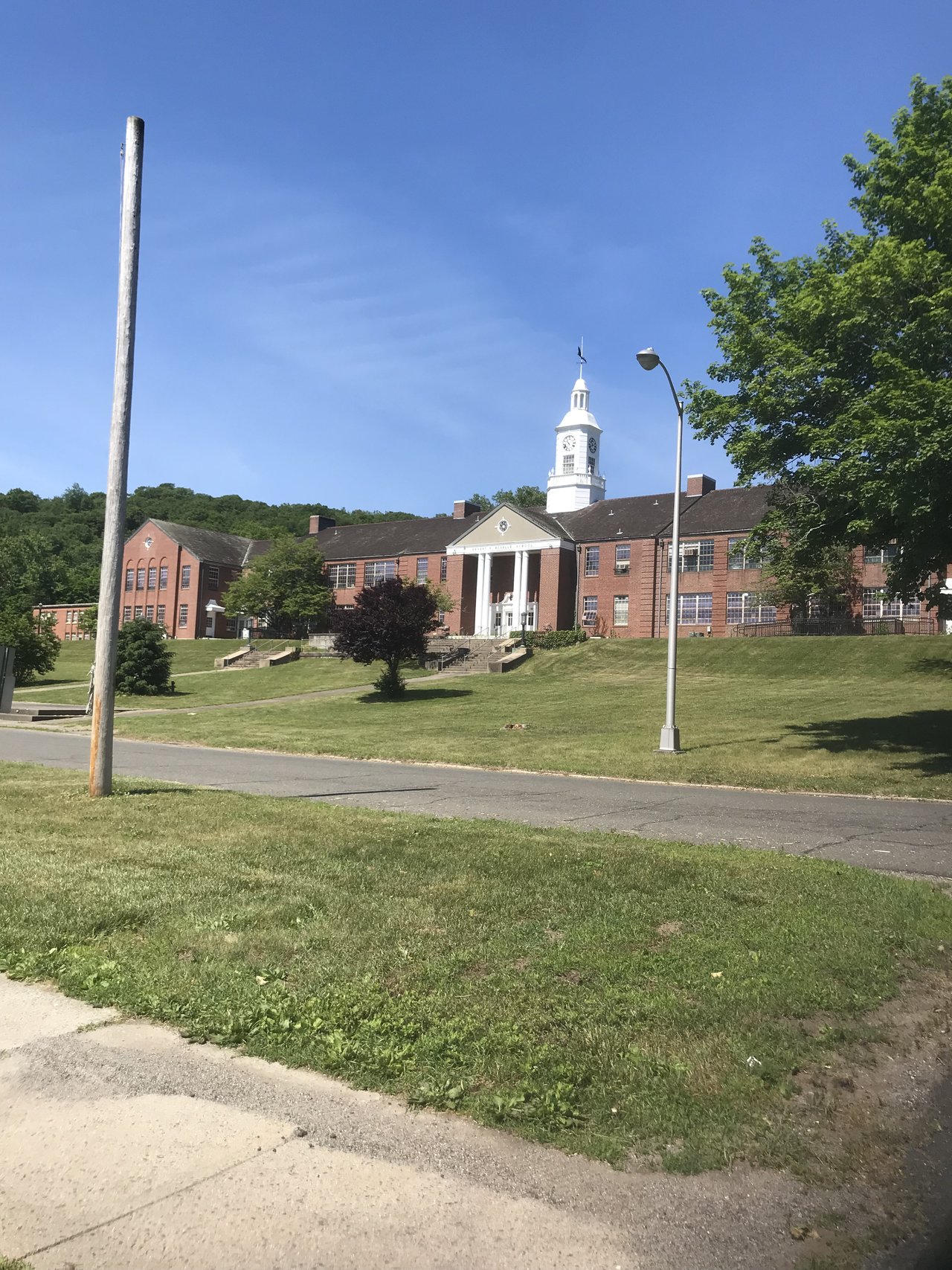
Southbury Training School opened in 1940, according to RISP. Its population peaked at 2,300 in 1969. Connecticut stopped admitting new residents in 1986 under a consent decree, after the U.S. Justice Department challenged the adequacy of its services in 1985, the News-Times reported.
Unlike Willowbrook and Pennhurst, Southbury never closed. Instead, it has kept shrinking. Its census was 84 as of July 6, 2026, according to minutes of its Board of Trustees. In March 2025, Gov. Ned Lamont said remaining residents were free to stay or to move voluntarily to community settings, and put the annual cost of care at more than $500,000 per resident.
Connecticut is now weighing what comes next. Public Act 25-89 required the state Department of Developmental Services to convene a working group on the school's current and future use and to report to lawmakers by Feb. 1, 2026. At the board's July 2026 meeting, the new commissioner, Elisa Velardo, reported no update from the legislature and said she had no immediate plans to change what her predecessor had in place. Separately, the state is paying for a $65,100 study of whether a vacant campus building, Crawford Hall, could become affordable housing, The Southbury Record reported on Sept. 2, 2026.
What replaced the institutions
As institutions shrank, states built community services, mostly paid for by Medicaid. Two programs carry most of that work today:
- ICF/IID care, a Medicaid benefit delivered in licensed, federally certified facilities.
- Home and community-based services, mostly through a Medicaid waiver, which pays for support in a person's own home, a family home, a group home or supported living.
For how those two programs differ, see HCBS vs. ICF/IID. For how waivers work, see What is an HCBS waiver?
The shift is not finished. As of June 30, 2024, RISP counted 94 public residential facilities still open in 32 states. In 2021, it counted 14,896 adults with I/DD living in state-run facilities of 16 or more people, down from 86,976 adults in 1967. The researchers who track these numbers note that some people still want to leave institutions, and that others need enough community options, with enough direct support workers, to avoid entering one.
Why this matters for providers and DSPs
- Your job grew out of this history. Community services expanded as institutions shrank, and those services depend on direct support professionals working in homes and communities.
- The court standards still echo in daily work. Written habilitation plans and outside monitoring were central to the court orders in Willowbrook and Pennhurst. Today's individual plans and quality reviews build on similar ideas.
- Some people you support may have lived in an institution. Older adults may carry memories of group living, rigid schedules and lost family contact. Knowing that history can help you support choice, privacy and routines the person controls.
- Staffing is still the pressure point. The Pennhurst court tied poor care to understaffing. RISP makes the same point about community services today: they only work with enough direct support workers. Wage and rate decisions by states and provider agencies decide whether that capacity exists.
- Closures are still being debated. Southbury shows that the last institutions raise hard questions about residents' wishes, guardians' views, cost and land. Providers in states with remaining facilities may be asked to serve people who move.