
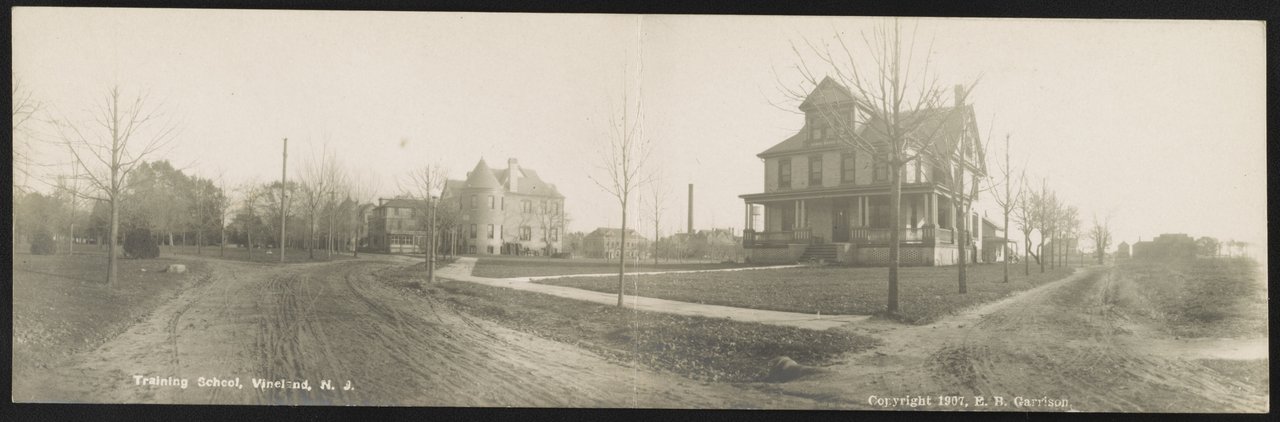
Psychologist Henry Goddard published a book in 1912 claiming that one New Jersey family proved intellectual disability was inherited and was behind crime, poverty and vice. The Kallikak Family: A Study in the Heredity of Feeble-Mindedness traced the relatives of a young woman at the Vineland Training School and ended with a call to keep people like her apart from society for life.
Part 1 followed Samuel Gridley Howe's school, built in 1848 to teach children and send them home. By the early 1900s, the purpose of many institutions had turned around: they were being used to keep people in.
A new job for the institutions
Institutions grew fast in the late 1800s. According to the Minnesota Governor's Council on Developmental Disabilities' history Parallels in Time, public institutions averaged about 250 residents each in 1890 and more than 500 by 1905. The council describes a shift from education and training toward segregation, and a new idea: that people labeled feeble-minded were a menace from whom society needed protecting.
Scientists and reformers who backed the eugenics movement believed human traits, including intelligence and behavior, were passed down in families and that society could be improved by stopping some people from having children. Institutions offered one way to do that.
Goddard and the Binet test
Goddard became director of research at the Training School for Feeble-Minded Girls and Boys in Vineland, New Jersey, in 1906, according to the Embryo Project Encyclopedia at Arizona State University. After a 1908 trip to Europe, he translated French psychologist Alfred Binet's intelligence test into English and used it to sort the school's children by what he called mental age. Around 1910 Goddard coined the label moron for people he judged to be mildly affected, a word that has since become an insult.
The Kallikak study
The book centered on a young woman Goddard called Deborah Kallikak. He invented the family name from the Greek words for good and bad.
Goddard's field workers, women trained at the school, visited relatives and neighbors and decided who was feeble-minded based largely on what people in the community said about them. Goddard claimed the family split into two lines during the Revolutionary War. One ancestor, he wrote, had a son with a young woman at a tavern, and from that son came 480 descendants. Goddard counted 143 of them as feeble-minded and 46 as normal. The rest, by his own count, were unknown or doubtful. The same ancestor's later marriage, he said, produced a respectable line with no such cases.
From that, Goddard concluded that feeble-mindedness was inherited and that it drove crime, drinking and prostitution. He estimated there were 300,000 feeble-minded people in the United States and that states were caring for about a tenth of them.
Segregation for life
Goddard's answer was segregation in institutions and colonies, which he argued would largely pay for itself by taking the place of almshouses and prisons. He discussed sterilization as another option but did not see it as the main solution. His case for lifelong confinement rested on a striking admission: institutions held people who could support themselves, he wrote, and who could leave "were it not for the terrible danger of procreation."
In other words, the reason for keeping them was not what they could or could not do. It was the fear of their future children. Parallels in Time notes that some superintendents later let residents leave only after they had been sterilized, a practice that a later part of this series will take up.
Who Deborah really was
Deborah Kallikak was Emma Wolverton, born in February 1889. According to the Embryo Project, she came to the Vineland school as a child after struggling in public school, and her teachers' notes described a girl who could learn more if she paid attention. She learned reading and writing, played music by ear and became skilled at woodworking and dressmaking. Goddard's tests in her early 20s put her mental age at about 9.
In 1914 she moved across the street to the New Jersey State Institution for Feeble-Minded Women, whose mission was to keep residents from having children. There she cared for a staff member's children, worked for years as a nurse's aide in the institution's hospital, played cornet in the band, and later ran the gymnasium and made costumes and sets for plays.
She spent 81 of her 89 years in institutions. Near the end of her life she was offered the chance to leave and declined, saying she was where she belonged, though she disliked the label. She died in 1978. Later researchers concluded she very likely did not have an intellectual disability at all.
How the study fell apart
The book was popular for decades and was cited in support of sterilization laws in the United States and abroad. Critics chipped away at it: in 1940 a psychologist wrote that it had no scientific merit, and later scholars questioned Goddard's untrained field workers, his reliance on secondhand reports about people's reputations, and even whether photographs in the book had been altered. Historians now treat it as a textbook case of bias passed off as science.
The damage was already done. The ideas behind the study helped justify lifelong institutional confinement and, as a later part of this series will show, reached the U.S. Supreme Court in 1927.
Why this matters for providers and DSPs
- Labels outlive their science. Goddard's categories were discredited, but the habit of judging people by a test score or a diagnosis did not disappear. Support that starts from what a person wants and can do, as in person-centered planning, is a deliberate break from that habit.
- Records shape lives. Goddard's workers recorded secondhand community reports as fact, and it followed a family for generations. Notes and incident reports written by DSPs should describe what happened, not pass judgment on the person.
- Skills were ignored. Emma Wolverton worked, cared for children, ran programs and created things for decades, yet her label never changed. Paying attention to what people actually do, and helping them use those skills in the community, is part of the job.
- Protection can become control. The institutions Goddard praised were described as care. Their real aim was to keep people from having families. Questions about relationships, sexuality and parenting still come up in services, and people's rights in those areas deserve the same respect as anyone's.