
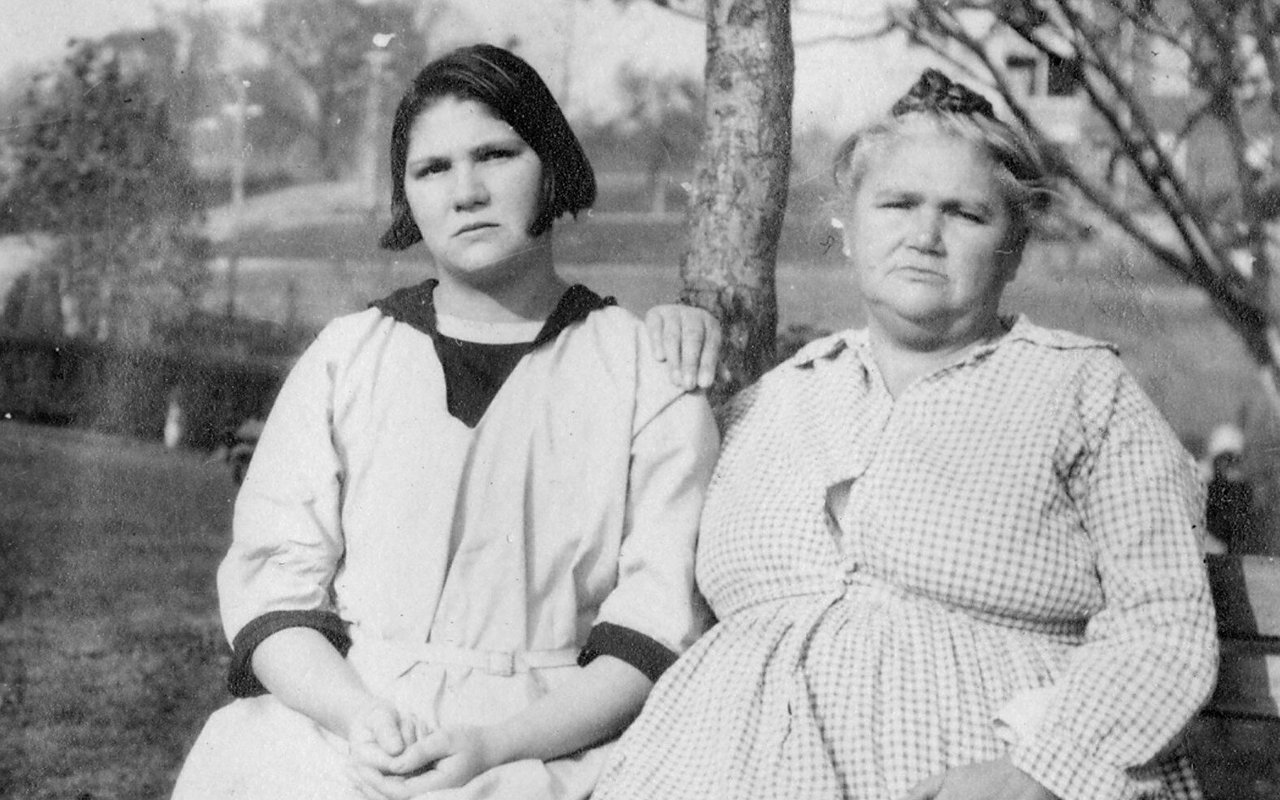
The U.S. Supreme Court ruled 8 to 1 on May 2, 1927, that Virginia could sterilize Carrie Buck, a 20-year-old woman committed to a state institution as feeble-minded, without her consent. The decision in Buck v. Bell, 274 U.S. 200, written by Justice Oliver Wendell Holmes Jr., upheld Virginia's 1924 sterilization law and has never been formally overruled.
Part 2 traced how eugenic ideas turned institutions into places to keep people from having children. This part follows how those ideas reached the country's highest court through one young woman's case, and what historians later found about it.
Who Carrie Buck was
Carrie Buck was born in Charlottesville, Virginia, on July 2, 1906, according to Encyclopedia Virginia, published by Virginia Humanities. From age 3 she was raised by foster parents. In 1920 her mother, Emma Buck, was committed to the Virginia State Colony for Epileptics and Feeble-Minded near Lynchburg.
In 1923 Carrie became pregnant. By her account she had been raped by a nephew of her foster parents. They petitioned a court to commit her, treating the pregnancy as evidence of feeble-mindedness, and the court did so in January 1924. After her daughter, Vivian, was born that March, Carrie was sent to the same colony as her mother in June 1924.
A test case, arranged in advance
Virginia's General Assembly passed a law in March 1924 allowing the sterilization of people in state institutions deemed genetically unfit to have children. The colony's superintendent, Albert Priddy, wanted to sterilize many residents but first wanted the law upheld in court. He chose Carrie Buck as the test case and held back the other orders.
The case was not a fair fight:
- The lawyers were connected. The colony was defended by Aubrey Strode, who had drafted the law. Carrie's lawyer, Irving Whitehead, was a former colony board member who supported sterilization. Legal historian Paul Lombardo's research found that Strode and Whitehead were boyhood friends and argued that the case amounted to collusion.
- The evidence was thin. At the November 1924 trial, only two of the colony's lay witnesses had ever met Carrie. A eugenics researcher who had spent one day with Carrie, her mother and her baby testified that they came from a defective family line.
- The defense barely defended. Whitehead called no witnesses of his own.
The trial court ruled for the colony in 1925, and Virginia's highest court agreed. Priddy died before the appeals ended, and his successor, John Bell, took his place in the case, which is why it bears his name.
The ruling
The Supreme Court heard arguments on April 22, 1927, and decided the case 10 days later. Holmes wrote a short opinion for the majority. He compared sterilization to compulsory vaccination, which the Court had upheld in 1905, and treated the lower courts' findings about three generations of Buck women as settled. He ended with a line that has become one of the most notorious in American law:
"Three generations of imbeciles are enough."
The word was used as an official label at the time. Holmes used it here as a verdict on three women's worth, and it is quoted in this series only to show what the Court said. Justice Pierce Butler dissented but wrote no opinion.
Carrie Buck was sterilized on Oct. 19, 1927, and released from the colony about a month later.
What followed
According to Encyclopedia Virginia, the decision encouraged other states to pass or rewrite sterilization laws modeled on Virginia's.
| Period | Sterilizations reported |
|---|---|
| United States, 1907 to 1927 | 8,515 |
| United States, the 10 years after the ruling | almost 28,000 |
| Virginia, 1927 to 1972 | about 8,300 |
At the Nuremberg trials after World War II, Nazi defendants cited Buck v. Bell in their defense. In 1942 the Supreme Court barred sterilization as a punishment for crime in Skinner v. Oklahoma, but it did not overturn Buck. Virginia repealed its law in 1974. A 1980 lawsuit on behalf of people sterilized at the Lynchburg institution ended in a settlement in which the state agreed to try to find them and offer counseling and medical care.
What the record really showed
Historians later concluded that neither Carrie nor Vivian had the disability the courts assumed. Vivian made her elementary school's honor roll in 1931, a year before she died at age 8. Carrie married twice after leaving the colony and died in 1983.
On May 2, 2002, the 75th anniversary of the ruling, Virginia Gov. Mark Warner apologized for the state's eugenics program. The decision turns 100 on May 2, 2027.
Why this matters for providers and DSPs
- Consent is the core issue. Carrie Buck was never asked. Decisions about birth control, sterilization and medical procedures still come up for people with intellectual disabilities, and the person's own informed choice should come first.
- Guardianship can be misused. A court-appointed guardian formally brought Carrie's appeal, yet no one in the process represented her interests. Alternatives such as supported decision-making are one response; see Ohio's supported decision-making bill.
- Relationships are a right. People supported by DSPs have the same right to relationships, sexuality and family as anyone else. Agencies that address these topics openly in person-centered planning are pushing against a long history of control.
- Labels in records travel. Carrie's commitment rested on assumptions written into records by people who barely knew her. Accurate, respectful documentation still matters.