
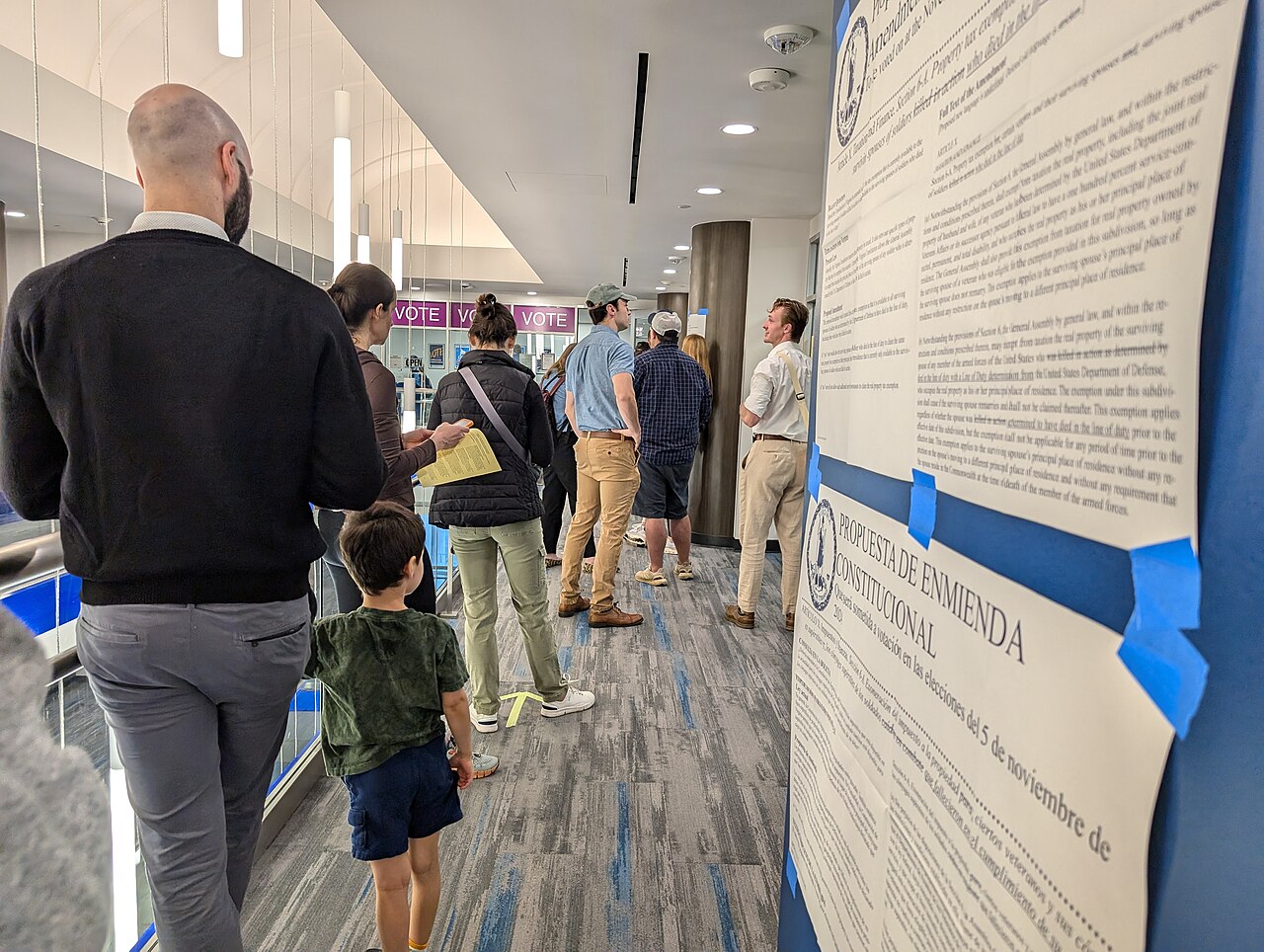
Question 3 on Virginia's Nov. 3, 2026 ballot would change who can lose the right to vote because of a disability: instead of anyone a court has found incapacitated, only a person a court finds unable to understand the act of voting. Disability Scoop carried the Virginian-Pilot's report on the measure Oct. 20, and the state's official explanation for voters lays out the change.
The question has three parts. It would make voting a fundamental right in the state constitution, restore voting rights automatically when someone convicted of a felony is released from incarceration, and replace the constitution's ban on voting by people adjudicated mentally incompetent with the narrower capacity test.
What changes for people under guardianship
Under the current constitution, the Department of Elections says, a person a court finds incapacitated loses the right to vote no matter what kind of incapacity it is, and only a court can restore it. Virginia law already moved this year. Identical bills, HB 1014 and SB 34, took effect July 1, 2026 and added § 64.2-2009.2 to the code. Under it:
- A person in a guardianship or conservatorship keeps the right to vote unless a court finds, by clear and convincing evidence, that the person can't understand the act of voting.
- A court can't rely on a guardian ad litem's report for that finding unless reasonable accommodation suited to the person's diagnosis or condition was provided.
- Reading or writing tests, education or knowledge tests and moral-character tests can't be used. Medical reports can.
- Anyone disqualified before July 1, 2026 can petition the court that made the decision for a review. If they don't, the review happens at their next periodic review hearing.
The amendment would put that standard in the constitution. If voters approve, it takes effect Jan. 1, 2027, according to the state's 2026 summary of election law changes. Tonya Milling, executive director of The Arc of Virginia, told the Pilot the point is "making sure that the question of guardianship is very clear, that it is not an automatic reason that you wouldn't be able to vote."
Why this matters for providers and DSPs
For adults with I/DD who have guardians, a finding of incapacity alone could cost the right to vote in Virginia until July 1. Supports coordinators and residential teams can check whether a person's guardianship order took away voting rights and, if the person wants to vote, raise the review petition or the next periodic review with the guardian. Direct support professionals can help with registration, sample ballots and getting to the polls; the choices on the ballot belong to the voter. For other states' moves away from all-or-nothing guardianship, see our coverage of Ohio's supported decision-making bill.